
Decatur Three-Day Release Window
The official Citizen Connect feed has no Last 72 hours button and no release-only list. It offers Current Confinements, Last 24 hours, Last 7 days, and custom date ranges. A three-day custom range is therefore the closest official way to collect recent admissions before checking who remains confined.
This wider window is useful after a weekend, holiday, or delayed check. It still does not prove who was released. A missing current entry could reflect release, transfer, or a data change. The jail and court hold the confirming records.
Build Decatur Three-Day Results
Choose calendar dates with care. A 72-hour span may cross parts of four dates depending on the time of day, while a three-calendar-day range is simpler but not identical. Record the exact start and end used.
- Enter through the sheriff booking page.
- Open Admits by Date Range and set a custom three-day range. Last 7 days is a fallback.
- Review matching names, charges, and arresting agencies.
- Compare each likely match with Current Confinements.
- Call the jail at 229-248-3050 for a public release or transfer fact.
- Use the clerk at 229-248-3025 for the final court result.
For activity confined to today, use Jail Releases: 24 Hours. For one named person across all custody systems, begin at Decatur County released inmates.
Decatur Three-Day Feed Fields
The interface confirms categories rather than a full release-record schema. Read each item for its limited purpose.
| Element | Meaning |
|---|---|
| Custom date range | Admissions between selected dates |
| Last 7 days | Broader admission fallback |
| Current Confinements | People still displayed in custody |
| Charges | Booking charges subject to court review |
| Arresting Agency | Agency associated with the booking |
The feed's 31-day maximum is only an interface limit. It does not establish how long Decatur County retains release records. For an older date, ask the sheriff records custodian.
Decatur Weekend Release Checks
Weekend checks often involve events recorded in different systems. A judge may set bond, jail staff may process paperwork, and the public feed may update later. The clerk's office lists weekday hours, so a final docket entry may not be as easy to confirm during a weekend. Do not infer a delay or denial merely because one source has not changed.
Save the booking identifiers and retry the current-confinement view. For an urgent custody fact, call the jail. On the next business day, the clerk can identify public bond, disposition, or sentencing entries.
Request Decatur Release Proof
For a formal local record, ask the Decatur County Sheriff's Office for the booking and release record, release date, release reason, bond information, or transfer destination. Provide a full name, birth date, booking date, arrest agency, and case number when known. The Georgia Open Records Act allows access to many government records, while protected fields may be redacted.
Use Georgia VINELink for a custody-change notification, GDC for a state offender, BOP for federal custody, and ICE ODLS for an immigration transfer. Each source covers a different system.
Decatur Feed's 31-Day Limit
The public tool states that a custom range may not exceed 31 days. That quirk shapes the online search but says nothing about legal retention. Break a longer research period into allowed ranges, or request the record directly. Do not describe an entry as deleted merely because it falls outside one query.
A dated screen capture can document what the dynamic source showed at that moment. The official release record remains the better proof of release type and time.
The Georgia public-record baseline is captured below.
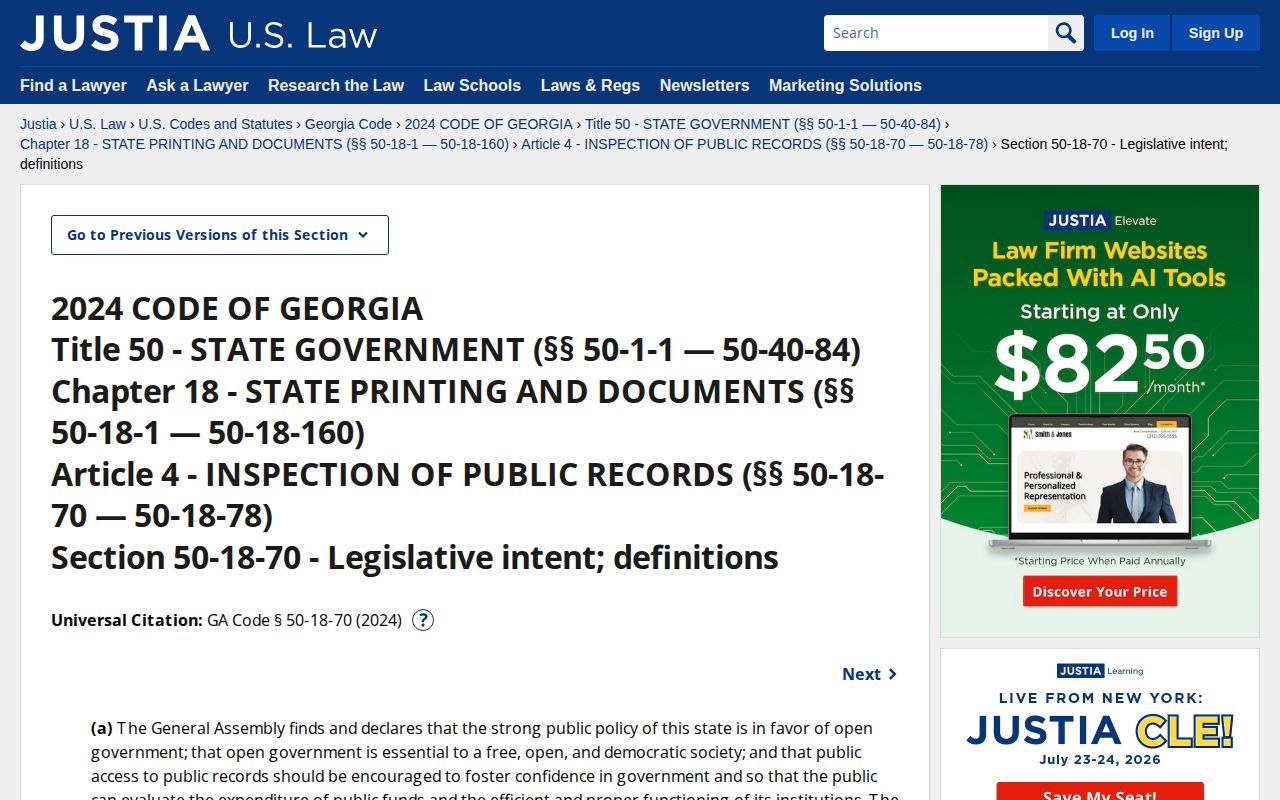
That law supports a request to the originating office when the three-day feed cannot prove release.
Compare Decatur Three-Day Records
Build a comparison rather than treating one screen as the answer. The admission range identifies people booked during the selected dates. Current Confinements shows people the system presently displays. The jail record documents departure. The court docket explains why local custody changed. Georgia VINE may report a release or transfer event, and GDC may show a new state institution or later discharge status.
Record the exact name spelling, booking date, arresting agency, and charge text before switching sources. Charges can change after prosecutor and court review, so use them to distinguish matches, not to state a final result. If two records share a name, add birth details or a booking number before calling the jail.
A person admitted before the three-day range can still be released within it. That is another limit of using Admits by Date Range as a substitute for a true release feed. Call the jail if the aim is a complete list of releases during the period, because filtering recent admissions alone will miss older bookings that ended during those dates.
Older Decatur Bookings Released Recently
The central three-day error is looking only at new bookings. Someone held for weeks may post bond, complete a county sentence, receive a dismissal, or transfer during the chosen weekend. That person will not appear merely because the admission filter covers the last three days. Current Confinements can show that the person is now absent, but absence does not give the time or reason.
Ask the jail for releases by release date if that report exists, or request named release records. The Decatur County Clerk can search the criminal docket for bond, dismissal, sentencing, and transfer entries. Georgia court e-access may require an account and may not expose the full local file, so phone or in-person contact remains a documented fallback.
For a sentenced state offender, use GDC rather than the county admission range. DCCI and Bainbridge Substance Abuse Center are in Decatur County but are not the county jail roster. Their releases can involve GDC dates, Parole Board decisions, and DCS supervision records.
Decatur Three-Day Custody Fallbacks
If the person left the jail under another agency's hold, follow that agency. BOP covers federal prisoners from 1982 to the present and can show Released or Not in BOP Custody, though that status does not exclude other custody or supervision. ICE ODLS covers current immigration detention and limited recent contexts. A local DHS detainer can make a jail departure a transfer rather than community release.
Georgia VINE supplies custody-change notifications when participating data is available. It is not a historical list of all Decatur releases. Save alert details and verify the event. For GDC, the offender-search disclaimer directs formal written verification to Inmate Records and Information in Forsyth, and the GDC open-records portal offers another formal route.
The broader source chain prevents false certainty: admission filter, current custody, jail release record, court disposition, and the next custody system. Each record answers one part of the three-day question.
Note: Preserve the exact three-day dates and the time checked, since the official tool does not provide a fixed rolling 72-hour release view or a complete release-only report. Retain the arresting agency and booking identifier with each possible match.
Ask for Decatur Three-Day Releases
When a complete three-day list is needed, ask whether the jail maintains a release-date report for the exact calendar span. State the start and end dates, and distinguish releases from admissions. If no compiled report exists, the custodian may identify existing booking and release records or explain how to narrow a request. Public-records law generally requires access to existing records, not the creation of a new custom report.
Request fields narrowly: name, booking number, actual release date and time, release type, and transfer destination when maintained and public. Ask the clerk separately for final court disposition. This split respects the different roles of the jail and court.
For state prisoners, send the request to GDC rather than the sheriff. GDC's portal explains copy charges, search or redaction labor, and an initial three-business-day response. The office may withhold protected institutional, investigative, medical, or security material while producing releasable data.